Kundalini Activation and Kundalini awakening are closely related, but they are not necessarily the same experience.
Article
Kundalini Activation vs Kundalini Awakening
One is an invitation to experience the energy. The other may become a journey of learning to live with what has opened.
Begin

A ceremony
Kundalini Activation
As I facilitate it, an intentional, supported experience in which you lie down, receive energetic transmission and allow your own Kundalini energy to respond naturally.
A process
Kundalini awakening
A broader spiritual process that may unfold gradually or suddenly, sometimes bringing profound changes in awareness, sensitivity, identity and the way a person experiences life.
An activation may become one doorway into that process, but attending a session does not automatically mean you have undergone a Kundalini awakening.
One is an invitation to experience the energy. The other may become a journey of learning to live with what has opened.
These terms are not defined identically across every spiritual tradition or modern practice. I can share how I understand them through the energetic framework in which I was trained and through my own experience as a Kundalini Activation facilitator.
In this article
Contents
- IKundalini Activation vs. Kundalini Awakening
- IIWhat Is Kundalini Activation?
- IIIWhat Is a Kundalini Awakening?
- IVCan Activation Lead to Awakening?
- VSigns of a Kundalini Awakening
- VIDoes Awakening Mean Becoming Someone New?
- VIIActivation, Kundalini Yoga and Shaktipat
- VIIISpontaneous and Difficult Awakenings
- IXIntegrating an Awakening
- XFrequently Asked Questions
Kundalini Activation vs. Kundalini Awakening
| Kundalini Activation | Kundalini Awakening |
|---|---|
| An intentional, facilitated experience | A broader spiritual process |
| Has a defined beginning and ending | May unfold gradually or suddenly |
| Often involves energetic transmission, music and surrender | May involve changes in awareness, perception and personal identity |
| Physical sensations, movement or emotions may arise | Experiences vary and may include physical, emotional or spiritual changes |
| Followed by rest and integration | May call for ongoing reflection, grounding and support |
| Does not guarantee an awakening | Does not require a facilitated activation |
Neither experience needs to be dramatic to be meaningful. And neither should be measured by how intensely your body moves or how extraordinary your spiritual experiences appear.

What Is Kundalini Activation?
Kundalini Activation is a practice in which you are invited to receive energetic transmission rather than deliberately generate the experience through physical effort.
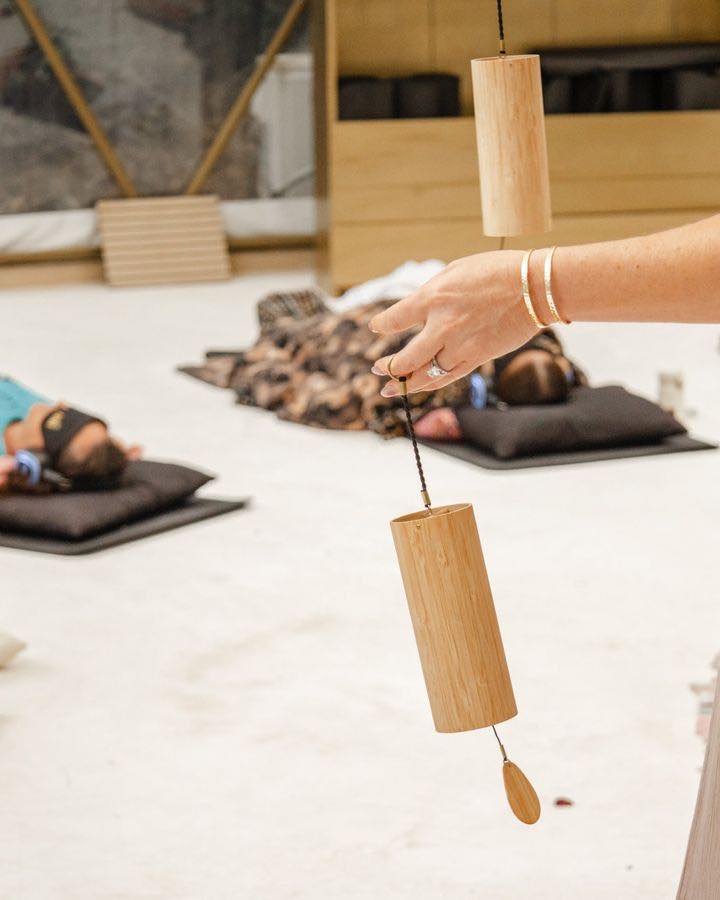
Depending on the session, I may begin with the breath: guided breathwork, gentle postures and kriyas, or a light body activation, to help you arrive in your body. Then you lie comfortably with your eyes closed while music plays. I move intuitively through the space, transmitting energy through my hands, voice and presence.
Within the spiritual framework in which I practice, I understand this as opening myself to Supreme Creator and divine energy, allowing that energy to move through me as a transmission. I may work with the crown chakra, third eye, heart, feet chakras or other energetic centers, depending on where I feel guided. Light language, sound and occasional touch may also be part of the experience. Touch is always optional and based on consent.
But the most important part of the practice is not what I am doing. It is your willingness to receive.
You don't need to visualize energy rising through your spine, force your breath or create a particular physical response. You are invited to surrender, notice and allow.
Some people experience warmth, tingling, spontaneous movement, emotional release or vivid imagery. Others enter deep stillness. And sometimes the experience is subtle. I don't see intensity as evidence of a more successful activation.
My role is to create and hold the space for your own energy to respond, not to manufacture an awakening.
If you're new to this practice, you can begin with my article What Is Kundalini Activation?, or read what happens in a session for a closer look at the experience.
What Is a Kundalini Awakening?
In several yogic and Tantric spiritual traditions, Kundalini is described as a dormant spiritual power, often pictured as coiled energy resting at the base of the spine. The awakening of Kundalini is traditionally associated with the movement of this spiritual energy and the expansion of consciousness. Different lineages describe this process in different ways, and not every modern interpretation is identical to its traditional roots.
In my own understanding, Kundalini awakening is not simply an event that happens during meditation or an energy session. It may become an unfolding relationship with your own consciousness, your body and the deeper dimensions of who you are.
Some people describe awakening as a sudden and unmistakable experience. Others describe a gradual opening that takes place over months or years. And some experience periods of profound transformation followed by long stretches of ordinary life.
There is no single timeline. There is also no universally accepted checklist that can establish whether someone has experienced a Kundalini awakening. This is why I believe discernment matters. We can honor the spiritual significance of an experience without needing to label every sensation or life change as evidence of awakening.

Can Kundalini Activation Lead to a Kundalini Awakening?
It may.
Some people experience a facilitated activation as a meaningful beginning or turning point in their spiritual journey. Others have powerful sessions without identifying what follows as a Kundalini awakening. And many people who describe spontaneous Kundalini awakenings have never attended a facilitated activation.
A Kundalini Activation session does not guarantee a Kundalini awakening.
This distinction is especially important to me. When I facilitate, I am not trying to push someone's energy toward a predetermined outcome. I don't believe spiritual transformation needs to be forced.
Within the energetic framework in which I practice, I experience Kundalini as an intelligent energy that responds in its own way and timing. My intention is to create an invitation for that energy to move, while respecting the person receiving and their capacity to integrate the experience.
Sometimes what unfolds is expansive and powerful.Sometimes it is gentle and quiet.Sometimes the most meaningful shift is recognized only later.
The purpose is not to chase an extraordinary experience. It is to become more available to what is already within you.
What Are the Signs of a Kundalini Awakening?
People who interpret their experiences through a Kundalini framework describe a wide range of physical, emotional and spiritual phenomena. Some commonly reported experiences include:
I
Physical sensations and spontaneous movement
People may describe warmth, tingling, vibrations, waves of sensation or a feeling of energy moving through the body. Some report spontaneous stretching, shaking or other movements during meditation or spiritual practice. These experiences can also occur during a Kundalini Activation session.
However, physical sensations and involuntary movements can have many causes. They are not proof of a spiritual awakening.
II
Emotional release and heightened sensitivity
Some people describe periods of increased emotional awareness. Old memories may come forward, and feelings that were difficult to access may become more noticeable. There may be tears, joy, tenderness or a desire for solitude, or a need for more rest.
These experiences deserve compassion and grounding rather than immediate interpretation. Not every difficult emotion is an energetic blockage being released. Sometimes an emotion is simply asking to be felt, understood or supported.
III
Changes in dreams, imagery and perception
Some people report vivid dreams, symbolic imagery, colors, sensations of expansion or experiences they interpret as spiritual connection. Others feel more connected to nature, more reflective or more aware of their inner world.
These experiences can hold deep personal meaning, and their interpretation remains individual. You don't need to adopt someone else's explanation of what you have experienced.
IV
Changes in priorities and relationships
One of the quieter dimensions of awakening. Some people begin questioning familiar patterns, relationships or ways of living, and notice where they have been abandoning their own needs, ignoring their intuition or living by expectations that no longer feel aligned.
These changes can also arise through therapy, personal growth and life transitions. Within a spiritual journey, they may become part of a process of remembrance. Awakening is not only about what you experience internally. It is also about how you choose to live.

Does Awakening Mean Becoming Someone New?
When people hear the word awakening, they sometimes imagine becoming a completely different person:
More spiritual.More powerful.More intuitive.Somehow more evolved than before.
But that isn't how I understand this journey. To me, awakening is often less about becoming someone new and more about remembering what has always lived within you.
It may invite you to question the identities you've carried, the patterns you've repeated and the places where you've learned to disconnect from your own truth. It may reveal where you are still seeking permission to be yourself, where you have confused love with self-abandonment, where you have learned to silence your intuition in order to belong, and where you are ready to choose differently.
Awakening is not measured by how many visions you receive, how intensely your body moves or how extraordinary your experiences become. It is reflected in the ordinary moments of your life: how you treat yourself, how you honor your boundaries, how you meet your relationships, how you respond when life becomes uncomfortable, and how fully you are willing to inhabit your body and your humanity.
This is where awakening becomes embodiment.
And embodiment is not something that happens only while your eyes are closed. It is something you practice when you open them again.
Kundalini Activation, Kundalini Yoga and Shaktipat
These practices and concepts are related through their association with Kundalini energy, but they are not interchangeable.
I
Kundalini Activation
In the style I facilitate, you primarily receive. You lie down while music and energetic transmission support the experience. I may open with breathwork, postures and kriyas or a light body activation, but the heart of the activation asks nothing of you. The emphasis is on surrender and receptivity.
II
Kundalini Yoga
Generally involves intentional practices such as movement, postures, breathwork, meditation and mantra, approached differently by different schools. Unlike the receptive format of my sessions, Kundalini Yoga typically asks you to actively participate. Both may be meaningful, but they offer different experiences.
III
Shaktipat
A Sanskrit term associated with the transmission or descent of spiritual power or grace within certain Hindu and Tantric traditions, often connected with initiation and the teacher and student relationship. I would not describe every modern activation as equivalent to traditional Shaktipat. I honor these roots while remaining clear about what I offer, rather than claiming an initiation or lineage that is not mine to claim.
Can a Kundalini Awakening Happen Spontaneously?
Yes. Within spiritual traditions and personal accounts, Kundalini awakenings are sometimes described as spontaneous, associated with meditation, devotional practice, significant life transitions or moments of profound insight. Others arise without any deliberate spiritual practice.
Not every unexpected sensation or altered state is necessarily Kundalini-related. If you are experiencing something intense or unfamiliar, approach it with curiosity while staying grounded and open to other explanations. You do not have to immediately decide what the experience means, and you do not have to navigate it alone.
Is Kundalini Awakening Always Pleasant?
No. Although spiritual awakening is often portrayed as blissful, expansive or beautiful, some people describe experiences that feel confusing, emotionally intense or difficult to integrate. This is one reason I don't romanticize intensity.
If someone is experiencing severe insomnia, panic, dissociation, mania, hallucinations, confusion or difficulty distinguishing internal experiences from external reality, those symptoms should not automatically be interpreted as spiritual awakening. They deserve appropriate medical or mental health assessment and support.
A spiritual framework can be meaningful without replacing clinical care. Kundalini Activation is a complementary spiritual practice, not medical, psychological or psychiatric treatment. Honoring someone's spiritual experience and caring for their physical and mental well-being can happen together.
There is no spiritual achievement in pushing yourself beyond what you can comfortably integrate.
How Do You Integrate a Kundalini Awakening?
Whether you've experienced a facilitated activation or something you interpret as a broader awakening, integration deserves as much attention as the experience itself. It doesn't have to be complicated. Sometimes it begins with the simplest things:
- Drink water and eat nourishing meals
- Prioritize sleep, and allow yourself to slow down
- Spend time in nature
- Journal what you felt, without rushing to create a story
- A warm bath, quiet meditation or gentle movement
- Reduce overstimulation when you feel sensitive
- Stay close to trusted people who offer grounded support
If you are experiencing distressing symptoms, seek appropriate professional care rather than relying on spiritual practices alone.
Most importantly, don't feel pressured to interpret everything immediately.
Not every dream needs decoding.Not every emotion needs releasing.Not every difficult day is a sign of energetic purification.
Sometimes integration is simply giving yourself permission to be human. To rest. To feel. To return to your body. And to allow meaning to emerge naturally, if it does.
Frequently Asked Questions
Is Kundalini Activation the same as Kundalini awakening?
Not necessarily. Kundalini Activation, as I facilitate it, is an intentional, time-limited experience involving energetic transmission and surrender. Kundalini awakening refers to a broader spiritual process that people may experience gradually or suddenly. An activation may be meaningful without leading to what someone would describe as an awakening.
Does everyone experience a Kundalini awakening after activation?
No. There is no guaranteed outcome. Some participants experience strong physical or emotional responses, while others experience subtle sensations or deep stillness. Neither response establishes whether a Kundalini awakening has occurred.
Can you have a Kundalini awakening without Kundalini Activation?
Yes. Spiritual traditions and personal accounts describe spontaneous awakenings and experiences associated with meditation, yoga, devotion and other practices. A facilitated activation is not a requirement.
How long does a Kundalini awakening last?
There is no universally established timeline. Some people describe a distinct event, while others understand awakening as an ongoing process of spiritual development and integration. Persistent or distressing symptoms should not be assumed to be part of a normal spiritual process.
Does Kundalini awakening always involve shaking or movement?
No. Spontaneous movement is one experience some people report, but it is not required. Stillness, emotional awareness or subtle internal experiences may also be meaningful. Physical movement alone cannot confirm a Kundalini awakening.
Is Kundalini Activation safe for everyone?
No spiritual or somatic practice is appropriate for every person. Kundalini Activation can involve intense emotions, unusual sensations or altered experiences of awareness.
If you have a history of seizures, psychosis, mania, bipolar disorder or other significant medical or mental health concerns, consult an appropriate licensed professional and contact me before considering a session. Pregnancy, significant trauma histories and other circumstances may also require individual consideration.
Your well-being and informed choice always come first.
Awakening Is Not a Destination
If there is one thing I hope you take from this exploration, it is that awakening is not a competition. You do not need to experience something extraordinary to be connected to your spiritual nature. You do not need to force energy through your body or chase the next activation. And you do not need to become someone else to be worthy of the life you are here to live.
I believe the deeper invitation of this work is remembrance.
Remembering your capacity to feel.Remembering your relationship with your body.Remembering the wisdom that becomes easier to hear in stillness.Remembering that your spiritual life and your human life do not need to be separate.
Whether Kundalini Activation becomes a single meaningful experience or part of a much longer spiritual journey, you are welcome to meet it without expectation.
Come curious. Stay grounded. And allow your own experience to reveal what it means to you.

Written by
Certified Kundalini Activation Facilitator, Certified Rose Priestess, Certified BodyTalk Practitioner and Feminine Embodiment Guide, and a former occupational therapy practitioner of nearly two decades. Founder of Radiant Flo in Carlsbad, California.
About AnyaRadiant Flo offers complementary spiritual and energetic practices. These experiences are not a substitute for medical or mental health care, and individual experiences and outcomes vary.

Begin your Kundalini journey
Receive the transmission
Curious, but want to understand the practice first? Begin with my free guide, Kundalini: A Gentle Introduction. Or join me in person in Carlsbad, or online from anywhere.
Not sure where to begin? Start here